Showing posts with label science-fiction. Show all posts

Tuesday, March 11, 2014

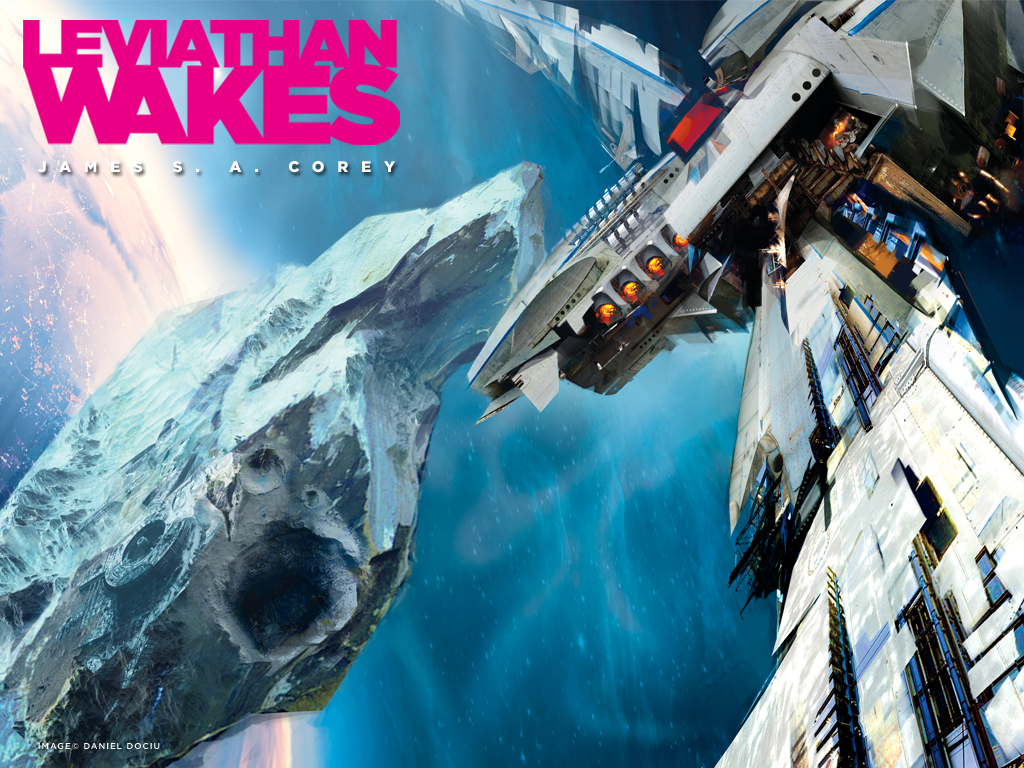
Leviathan Wakes

I just finished reading Leviathan Wakes by James S. A. Corey.
Wow. This was really good. Oh my god. I don't want to give out spoilers, but; Vomit. Zombies. In space.
Also, my favourite quote "Something out there has a comm array that'll put a dot the size of your anus on us from over three AU away".
Much of what I enjoyed through this novel was the plausibility of the tech, the economics and the politics. A very solid picture of how communities work day to day in the mid solar system was detailed over the course of the novel, which as a backdrop to the action and drama made it all the more enjoyable. I notice now it was nominated for a Hugo in 2012, and I can certainly agree with that.
I also enjoyed the main characters, particularly Miller the cop who gets far too attached to the girl he's looking for, even though all he's ever done is look at pictures and read her email. Gritty and flawed, but consistent in his approach and world view, and certainly driven from his experience on the Ceres outpost in the Belt.
Definitely read this one, and there are more to come too.


Saturday, January 25, 2014

The Trilisk Revolution

I just finished The Trilisk Revolution by Michael McCloskey.
If you've been reading this series, keep going! Sometimes while reading a series of more than three, I tire of the concepts and characters and don't come back to it. Not so here. It does help that its a nice short novel, but still, tightly written and full of new turns and developments.
This one has the same tech and the same characters, but they open up their mission and take some serious risks, and of course things don't go to plan. I think you have to expect that from McCloskey at this point, and I like that.


Tuesday, December 3, 2013

The Trilisk Hunt

I just finished reading The Trilisk Hunt by Michael McCloskey.
Excellent. I really enjoyed this latest in the Parker Interstellar Travels series and I think its probably on a par with the first novel in the series when it was fresh.
If anything, I'd say it was a little short and I would have liked more complexity, but as a read, it was tight, enjoyable and had lots to hold the interest. In particular, this one improves on general character development from previous novels. The first few chapters were introductions for some new cannon fodder, I mean, characters, all being recruited for the PIT team. While this style is not new, it was definitely effective with each newbie having their own motivations and colour.
McCloskey excels with new alien life. In particular I enjoyed the Trilisk descriptions of annoyances of being inside a human host, and the very alien life the team finds in their latest mission. The tech was fun, plenty of big weapons, and use of their newly discovered Trilisk tube cloning. Also, cloning means you can have more character deaths right? Only, it didn't quite pan out the way I thought it would. Good stuff.


Tuesday, November 19, 2013

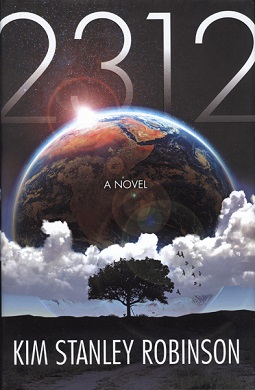
2312

I just finished reading 2312 by Kim Stanley Robinson.
I really enjoyed reading The Mars trilogy by Kim Stanley Robinson, but I'm afraid that I didn't really enjoy this novel much at all really.
First of all, the things I liked. There were some glorious descriptions of the solar system, natural events, processes, objects and history of formation and so on. This was clearly well researched, and obviously something that Robinson is interested in and knows a lot about. I enjoyed all the arguments and results of the various terraforming techniques across the planets, particularly Venus. There was a beautiful section where the characters are actually surfing a ring of ice crystals around Saturn. That was awesome.
Other than that, not a lot actually happens. I would characterize it as a little bit of intrigue as some of the independent AIs become more involved, self aware and self motivated, but not provably so. Pfft. I suppose it was all relatively realistic and believable, but really, not very exciting. It was 25% through before the city on Mercury was nearly bombed (derailed), and I was thinking "finally!" but then the next 10% was a description of two of the characters walking down a tunnel dealing with radiation poisoning. And then the pace slows down.
There are 14 small chapters called Lists(N) which iterate over a bunch of related concepts or words related to the chapter. Really? You want me to read these? For what?
There are 18 chapters called Extracts(N) which contain a series of completely disconnected paragraphs taken from either news or books of the period, each of which related to the topic, trying to further the readers understanding with a bit of flavour and detail. I found these very jarring to read, and had to force myself to make a sound like an old TV channel change between each paragraph so that I wouldn't be tricked into trying to connect them. It would have been better to find a way to write some of the more interesting ones of these into the story somehow.
There were 3 chapters called Quantum Walk(N), which were essentially stream of consciousness style, but from a primitive AI intelligence. Annoying, but at least they gave you an insight into the level of intelligence involved.
Overall, really, I was just waiting for it to be over.


Thursday, August 29, 2013

Ready Player One

I've just finished reading Ready Player One by Ernest Cline.
Wow, I really enjoyed this, it was just so much fun. It's set in the near future, but essentially takes place inside an MMO. The basic premise is that there is a massive fortune to be won if a player can solve a bunch of obscure puzzles, but what makes it really interesting is that the theme for all of this is 80's trivia but mostly focused on all those things I'm personally really interested in. Computer games, Science Fiction/Fantasy, D&D, computer programming.
A small sample of references in the book includes Blade Runner, Highlander, Ghost Busters, Star Wars, Star Trek, War Games, Ferris Bueller's Day Off, Monty Python films, Zork, Defender, Pac Man, Adventure, D&D, Tomb of Horrors, Family Ties, Knight Rider, Max Headroom, very much Anime and so on. There is so much detail in the references to these subjects that it is one continual reminiscing session about all the things I enjoyed growing up, and still love today.
There were also some pretty cool technologies used by players to connect to the game, including haptic feedback suits, smell sense towers, full-immersive laser-in-the-eye goggles, full motion capture movement rigs and so on. I also really liked the flavour of the dystopian world that had been left behind too, as clearly people were giving up on the poverty of the real world and spending most of their time jacked in to this free online experience.
The only thing that jarred a little for me was a description of how many times the main character had seen each of the films, and spent time mastering the games, and read the comics etc. I figure if you go total up the amount of hours he needed to spend learning, watching, playing, listening, he would have had to have been a thousand years old. I mean, I've seen "Monty Python and the Holy Grail" at least 25 times, and played Elite on Amiga for months on end in all my spare time in the day, but all the stuff this guy has experienced added up in time was just plain impossible. Or perhaps I was just jealous. Hard to tell.


Wednesday, July 31, 2013

Existence

I just finished reading Existence by David Brin.

In the end I really enjoyed this one, although there was a period in the middle, probably about 40% of the book which I thought was very drawn out and I think could have done with some heavy editing. The early and late stages flowed really well and were interesting. Clearly, this novel was built from a range of ideas and short stories (the author admits as much at the end) and mostly it works well, but probably it needed some more chopping.
There is some very cool tech in this one. It's near-future, so nothing crazy, but some really good extrapolations of today's tech. In particular, I loved the smart network-integrated contact lenses which are where we'd like Google Glass to get to at some point. This integrated with sub-vocal commands and gesture and focal tracking for input which made for some really seamless personal technology. I enjoyed some of the discussion on how to deal with strong AI as it is developed, with the solution essentially to raise AI like children to teach them human values. There was one particularly cool piece of tech where a video of recorded events was played back at high speed, with an AI interpreting and summarizing the content in the sound, and then as the video was merged into real-time as the viewer caught up, the AI summarized less and less until just the raw feed was left.
Some things annoyed me. Perhaps I'm too sensitive about this, but there were a lot of new words created by taking existing words, and replacing vowels with 'ai', to mean AI enhanced versions of those technologies, such as ailectronic, vaice, aitopilot. They just seemed awkward and annoying to me.
There was a lot of discussion about two topics in particular that formed the main theme of the novel, and they are - coverage of possible extinction events, or problems leading to extinction, and also, the Fermi Paradox. Most of this was really well covered and if you are interested in these topics, then you will definitely enjoy this book.


Friday, May 24, 2013

The Hydrogen Sonata

I love a good Culture novel, and I enjoyed reading The Hydrogen Sonata by Iain M. Banks at least as much as any of his others.
Since the events in Excession, the ships in the ITG (Interesting Times Gang) seem to have retired from being involved in high level events, but fear not, a new motley crew of minds comes together to meddle, with the best of intentions, in the affairs of another civilization.
As is expected, the ship names and their respective attitudes and humour is colourful and creative, hilarious at times. In particular I enjoyed some of the side-channel communications between ships as they comment on or make fun of other ships behind their backs as it were.
Interesting new tech, weird places, bizzare things. The flat, flying artificial sentient pet drapes itself like a cape; large scale weird alien art, such as a mountain in a windy area holed to produce a massive but complex Sound; the guy with 56 penises driven by four hearts so he can have sex with a record number of people; of course, enough but not overwhelming techno-babble about ship tech when they perform outrageous feats of "disloc", or weapons fire in battles. It's pretty much a constant stream of delight really.
The actual writing was complex but always understandable with a good flow. Banks often uses dashes to separate an aside within a sentence - because, you know, it can be annoying when you get lost in a tangent - to improve readability. I didn't do that very well, but you get the point. Descriptive sentences are often very long and complex, dense with detail, but as long as you are immersed, and not distracted, it really pulls you along.
A fantastic read.
Also, if you enjoy Banks' writing, you should visit here, as he is "officially Very Poorly".


Sunday, April 21, 2013

Mindjammer

I just finished reading Mindjammer by Sarah Newton.
I only managed to read half this book as I found it just too annoying. This is only the second time I can remember bailing on a book, but it's quite long and I have lots of books lined up that I'd like to read.
First, the good things. I like some of the tech, hack descriptions, locations and scenery. Mostly the writing wasn't too bad, some cool descriptive word choice and language generally interesting with good flow.
Unfortunately, it was also littered with things that really annoy me. The things below can be found in many if not most books a little, but when they happen constantly and often, I find myself rolling my eyes and sighing and it breaks me out of any captivation.
Naming. Naming is important. OK, calling the activity of going through hyperspace "planing" is borderline, but then calling hyperspace ships "planeships"? Just no. Also, one of the main characters is called Max Proffitt. Guess what his character is like. Eye rolling time.
Use of an interesting, unusual descriptive term is really effective when used occasionally. When everything is coruscating or has coruscation, it's eye rolling time. I found 42 hits on the word variform. Apparently everything is variform in this universe. Which is fine, but after being used the fifteenth time in a descriptive way, it's more eye rolling time. If someone is incandescent with rage, which is a really cool description, each and every time they are upset...
There is a cool instant messenging tech through implants which the characters use to 'cast' eachother. Instead of using quotes, Newton uses a dash at the beginning of the line, like
- Max is right, cast Clay.
to indicate the communication. However, there is no way to tell in such lines, aside from context, whether the last part of the line is being said/cast by the character, or a is follow-up description. Most of the time it's obvious but sometimes I had to re-read it to check, and it started to get very annoying. I've seen other authors use italics, angle brackets, different fonts, to much better effect.
Is it just me, or should the editor be picking this stuff up?
Saturday, March 16, 2013

Force Cantrithor

I just finished reading Force Cantrithor by Michael McCloskey.
Force Cantrithor proposes a new kind of space warfare technology based on FTL electromagnetic field manipulation. The tech is pretty cool, but even though FTL travel also exists, I couldn't help having some believability issues with it. In fairness, the characters were also struggling with the paradoxes this might create and some of the other uses of it that come in later in the book, so it has clearly been thought about, and does form the central focus of the novel. In the end I feel fine about that, as this is what SF is all about; pushing some concepts and discovering the ramifications.
The book is written really well, and I especially enjoyed the ending - actually the pacing was good throughout. I thought the character work was quite good. The central character Emil struggles with his abilities and his humanity and the reader learns along with him what his situation truly is and what is really going on. The slow discovery of his story was part of the fun; my guess about halfway through was pretty close to the mark, but still not on it.
Part of the book was clearly setting up for future novels in the series, so I look forward to reading more.

Tuesday, March 5, 2013

Zero Point

I just finished reading Zero Point, Neal Asher's second in the Owner series.
And I thought the first novel in this series was hugely violent; I actually felt a little nauseous reading some of this. Zero Point takes the wasteful, corrupt, self-serving, brutal leadership of Earth's "Committee" and then completely frees it of restraint, balance, morals and restrictions. The result is a psychotic, damaged, paranoid, control-freak greenie leader who starts laying waste to the Zero Asset part of Earth's population. The results are truly horrible, and this is even before she tortures her father for two weeks straight.
The story is split between Mars, the Argus space station and Earth, and everyone is struggling to survive, obviously except the leader of Earth who has every luxury available and fawning minions trying not to be noticed. Alan Saul with others on the Argus further develops some interesting technology, the distributed brain/processing cubes and androids are very cool. I'm trying not to spoil too much of what develops, but there is certainly plenty to keep a constant interest in events.
I enjoyed most of the characters and their development, although I thought Hannah was a little flat and less interesting than in 'The Departure'. I enjoyed Var's struggle with leadership and responsibility on Mars.
I love Asher's chapter beginnings which all have a little bit of history which help tie this unreal Earth back to ours, and show us the path to this nightmare. A little bit of social and political commentary in there too.
Good stuff!

Sunday, December 30, 2012

Trilisk Supersedure

I just finished reading The Trilisk Supersedure by Michael McCloskey.
Another good read from McCloskey; he really does aliens very well. I particularly liked reading the aliens' internal thoughts, they're just very different from us with strange motivations and cultural drives. They're not just some sentient creatures, they're intelligent, but driven differently. I like that the main characters are nowhere near as safe as they think they are when trusting them - it's very well done.
I also like some of the style of writing, where different individuals drive the different chapters or parts, but with overlapping descriptions of events or time periods It can be really interesting just working out whether parts are overlapping at all, and whether the events are similar, but when things do match up, you get the benefit of different points of view subtly changing your understanding of what is going on.
While the story, tech, ideas and aliens are all really good, again its only the characters that are bit soft, but not in an annoying way. Actually, Cilrith wasn't bad, and the aliens were cool, but perhaps needed more from Magnus and Telisa. More Telisa really :_)
The tech and ideas were really good though, and I particularly liked the reveal of just what Trilisk Supersedure was referring to, right at the end. Excellent. I'll read more for sure.

Tuesday, November 27, 2012

A Galaxy Unknown

I just finished reading A Galaxy Unknown by Thomas DePrima.
This is a classic space adventure novel featuring a cute young Ensign lost in space for ten years, who after being found turns out to be a brilliant warship commander. All the expected elements are there with FTL travel and communications, space stations, hollowed out asteroids, laser weapons, torpedoes, and so on. I don't think there were many new ideas on show, but it was written quite well and had a good pace.
I wasn't completely convinced by some of the main bad guy actions. Why worry about strict controls on  abusing prisoners when they heal easily and you're just going to mind wipe them later? I thought the full court-martial for the heroine when she returned triumphantly home was pretty cool. I've always wanted to see how a rigid big-military society might actually deal with this sort of action in the aftermath.
I think I'll read more of the series, it was a relaxing, enjoyable read.

Tuesday, November 13, 2012

Nymph: The Singularity

I just finished reading Nymph: The Singularity.
Lets get the obvious stuff out of the way first. There were lots of sex scenes, both android on android and android on human, so that was fun for a change.
There weren't really a lot of new, interesting ideas here, and I was hoping that there might be a few more with the part title, 'The Singularity'. I suppose I was hoping the novel would cover how technology driven by development of sex technology (and this has been an historically strong force) causes humanity to spiral into a technology singularity, driven by AI arising from ever better sex robots. That would have been interesting, even if its not a particular novel idea.
No, this was more covering 'the androids are people too' element, with discussion on how humanity is all going to die because of their environmental disasters and selfishness, and the clever immortal robots will inherit the Earth. I'm pretty sure Asimov covered all of that in the 50s, before the Singularity concept was conceived.
Still, even with some editing problems, I enjoyed reading this, it wasn't badly written, paced quite well, and fun to read. The scenes where the main Android-girl was naive with respect to aspects of humanity and getting social things wrong were fun, and the general process of learning through experience was quite well done.

Wednesday, October 31, 2012

The Clockwork Rocket

I just finished reading The Clockwork Rocket by Greg Egan.
Wow, you really have to admire the lengths Egan will go to for a novel. I thought Incandescence was pretty hardcore, and Schild's Ladder was there too. Where in Incandescence he explains general relativity as the characters discover it for themselves from basic experimentation, and in Schild's Ladder he builds on existing Quantum Theory, in The Clockwork Rocket (and soon parts 2 and 3) he proposes a whole new universe where the laws of physics are subtly yet vastly different. For a near complete explanation of these new laws of physics, you can have a look at his extensive web site on it.
As in Incandescence the reader discovers the universe through the characters experiments and discoveries. Essentially light can travel at different speeds depending on its wavelength and the ramifications are pretty weird. Following the theory is very difficult and I got lost quite a bit, but you have to remember it's a novel, and you are not studying at university, and to just try to enjoy the ride. Familiar Egan territory.
Yes, Egan is amazing and produces such massive depth and such incredibly different ideas in SF, but I'm not sure I enjoyed this as much as I would have liked. The explaining of physics through the experiments of the characters was interesting once, and while very different, still somehow very similar. If that makes sense. There were lots of really cool ideas along the way though such as the reproduction cycle of the 'people' and how it affected their society and reflections on our society I guess.
Brilliant and amazing and wondrous, but somehow also a little flat.

Tuesday, October 2, 2012

The Departure

I just finished reading The Departure (Owner Trilogy 1) by Neal Asher.
Asher has taken the Orwellian nightmare, and pushed it to its horrible, brutal limit using some more modern SF devices such as AI integration. Set a century or so in the future, the world governments have centralized their power into a monolithic, all-controlling, ever wasteful "Committee". Those in power enjoy wealth, while the rest of Earth's twelve billion not only languish in poverty, but are instructed on politically correct thought and constantly monitored to ensure compliance. Those guilty of incorrect thought, are sent for "adjustment" which involves incredible torture and very often termination, including being fed live into an incinerator.
Of course, Asher describes all of the horrors in gloriously intense detail. My favourite part of the Committee control infrastructure was the readergun, which is a massively powerful automatic weapon emplacement with an id-chip reader, programmed to annihilate anyone with an ID on a blacklist, or alternately anyone not on a whitelist. A very nasty control device indeed. Then there is the laser weapon satellite network designed to similarly zero in on and kill individuals.
The story follows Alan Saul's journey of revenge against the Committee, and a particular member of the Inspectorate. It all comes down to control, who has it, who is willing to use it, and how far they are willing to go. Since this is a game of the highest stakes, all the main characters were willing to commit massive amounts of atrocity to achieve their aims and their struggle makes for some hugely violent reading.
Entertaining, satisfying and very dark.

Monday, September 3, 2012

The Trilisk Ruins and The Trilisk AI

I just finished reading both The Trilisk Ruins and The Trilisk AI.
Both of these were pretty small, but tight reads (200-300 pages), and at $6 for both, it was a pleasure to read a new author. I read and enjoyed the first enough to go straight into the second, which is unusual, but I couldn't resist.
The first was probably the better book, introducing new aliens and technology which is always fun. There was a switching between the alien point of view to the humans across chapters producing great contrast. This also made it difficult and quite interesting to work out just what the hell was going on for a while in the quite novel environment of the Trilisk Ruins.
The characters were ok, maybe a bit washed out, but they had their faults and challenges and individual goals, and the author was quite happy to kill many of them off too. That helps.
I'll definitely be interested to see more in the series.

Tuesday, June 12, 2012

Rule 34

I just finished reading Rule 34 by Charles Stross.
I would say that writing near future SF would have to be one of the hardest genres to write to. It has to be plausible enough for 20 years in the future, so recognisable, even familiar, yet encompass changes worthy of SF and futurist predictions. I think Stross does an excellent job here, and has produced probably the most interesting near future novel I can think of.
In addition to cool SF and futurist possibilities, its also quite, er, dirty! Murdered sex fetishists, psychopath sex scenes and internet porn memes abound.
The technology being used was very cool. Some obvious ones like self driving cars, remote operated police air-drones, and HUD glasses, and some more subtle things like virtual machines on smartphones. Nothing crazy here, all quite plausible, and in fact much of it in prototypes now. In fact, it was very cool to have a vision of how some of this prototype tech we do have would affect us if it was usable and completely functional.
Stross writes very well. I prefer his writing to Neal Stephenson's because its tight, interesting and punchy. I often have to hit the Kindle dictionary which is always fun. Fun because it's so easy, and you learn crazy new words.
I won't ruin the story, you should go read it. Excellent. Hmm. I may have to read it again actually, I mean, what was...

Monday, May 14, 2012

Conquest

I just finished reading Conquest.
The series is starting to wear on me now. I think the first person narrative is starting to annoy me. As is the main character, he's just a bit of a dick. The other main characters are becoming more shallow rather than being developed.
But in the next book they build a huge space weapons platform!
Meh.

Monday, April 30, 2012

Anomaly

I recently finished reading Anomaly.
Although quite short, and more like a long short story, this had some great concepts and is well worth the read. Not your typical alien first contact storyline, I found this engrossing and somehow plausible. Oh, except for the bit where the U.N. invades the U.S., that was jsut silly, but nevermind.
OK, I don't want to spoil any of the actual interesting content, so just go read it. Short, cheap, interesting.

Tuesday, April 10, 2012

Rebellion

I just finished reading Rebellion.
Quite good fun, light reading, not particularly well written, but still very readable.
In this episode of the series, the machines keep pushing the human marines to fight for them, but Rigg's Pigs fight back, having had enough, it being pretty clear the Macros are just going to make them keep fighting until they are all dead.
There were some good concepts and sequences, involving a race of centaur-like people that have been forced off their homeworlds to live in giant space habitats. They did seem a little fragile though, not sure how they haven't all been killed off looong ago. There was also an introduction of a new race of group intelligent bio goop, a new Nano intelligence and some more information regarding the Blues.
So a nice easy holiday read, maybe a bit sexist and simple, like the protagonist, but there is still interest for me to keep reading the series.